The most powerful Vedic ritual to worship Lord Shiva on the great night of Mahashivratri — seeking liberation, prosperity, and supreme spiritual upliftment. Performed by expert priests.
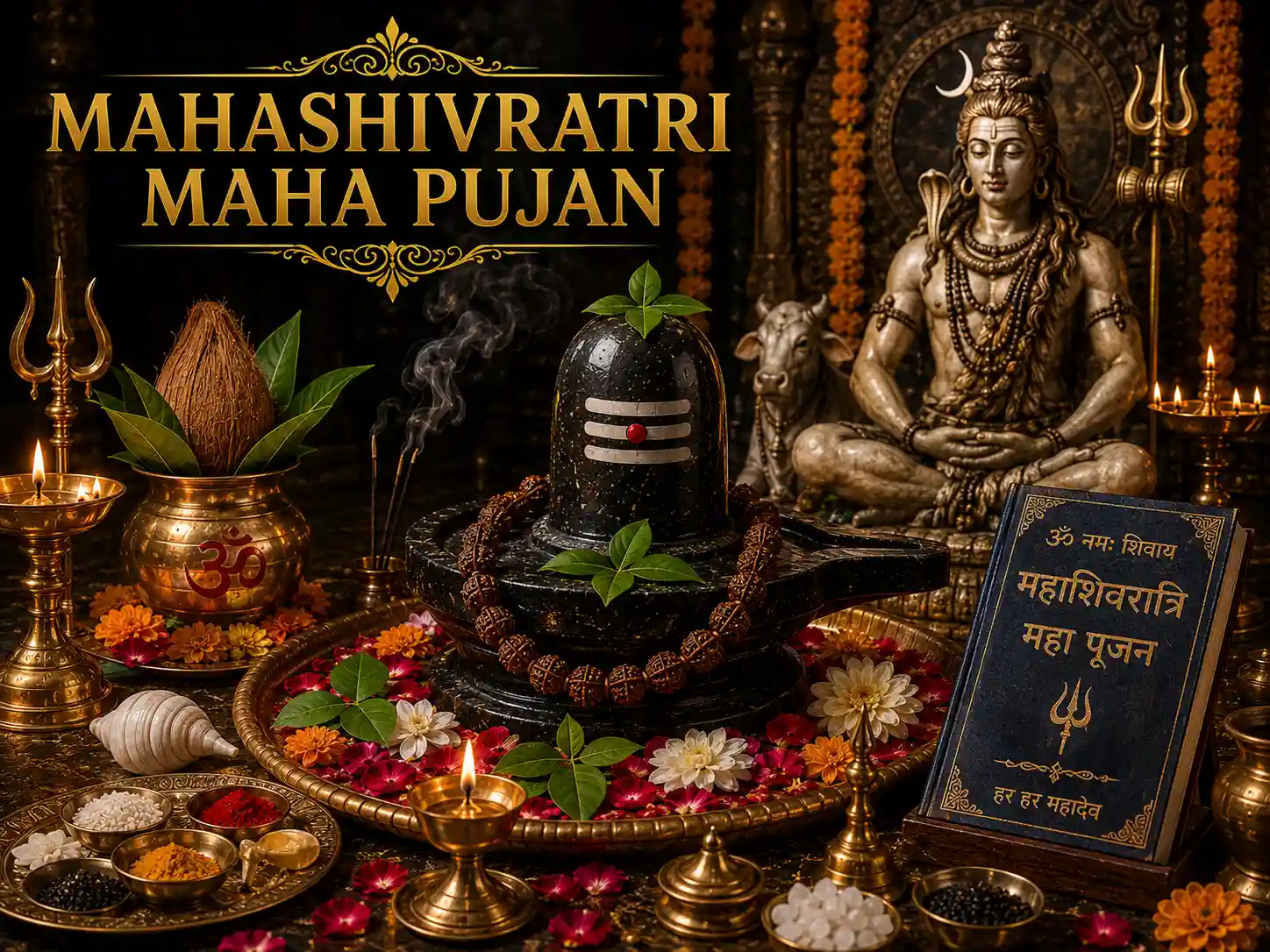
Mahashivratri Maha Pujan is the most profound and auspicious Vedic ritual dedicated to Lord Shiva, performed on the great night of Mahashivratri — the "Great Night of Shiva." This festival, which falls on the 14th night of the dark fortnight in Phalgun (February–March), marks the divine marriage of Lord Shiva and Parvati, and is the night when Shiva performs the Tandava, the cosmic dance of creation, preservation, and destruction.
The Maha Pujan involves an elaborate Rudrabhishek (ceremonial bathing of the Shiva Lingam) with Panchamrit, water, milk, honey, curd, and ghee, along with the chanting of powerful mantras including the Maha Mrityunjaya Mantra (1,008 times), Om Namah Shivaya, and the Rudra Mantra. Devotees observe a day-long fast and remain awake through the night, participating in the Jaagran (night vigil) and performing the Shiva Tandava stotram and other sacred hymns. This all-night worship is believed to grant the ultimate boon of liberation (Moksha) and the fulfillment of all desires.
Mahashivratri is considered the most sacred night in the Hindu calendar. By performing this Maha Pujan with devotion and in accordance with Vedic traditions, one receives the divine grace of Shiva, which dispels ignorance, destroys all sins, and guides the soul on the ultimate path of liberation. This ritual is the key to unlocking the infinite compassion and power of Lord Shiva.